I talk through the discharge. Then I read it.
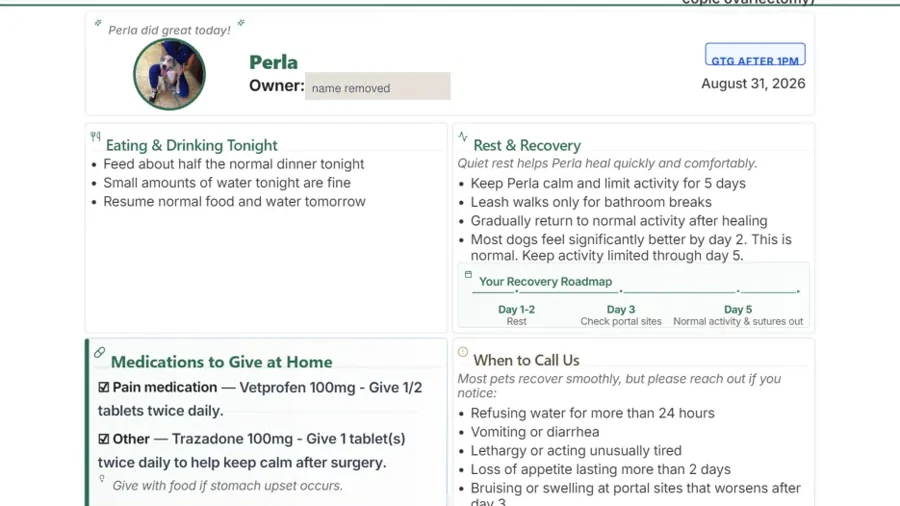
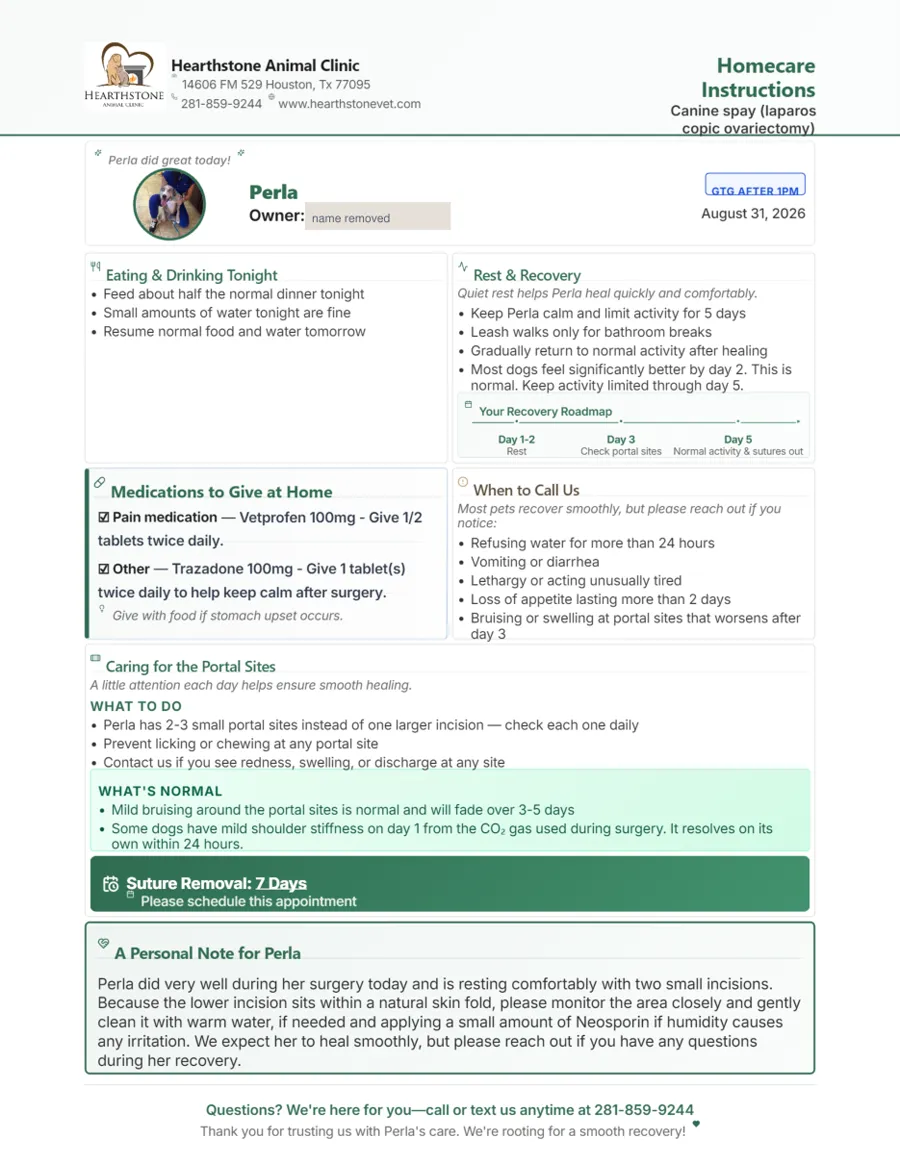
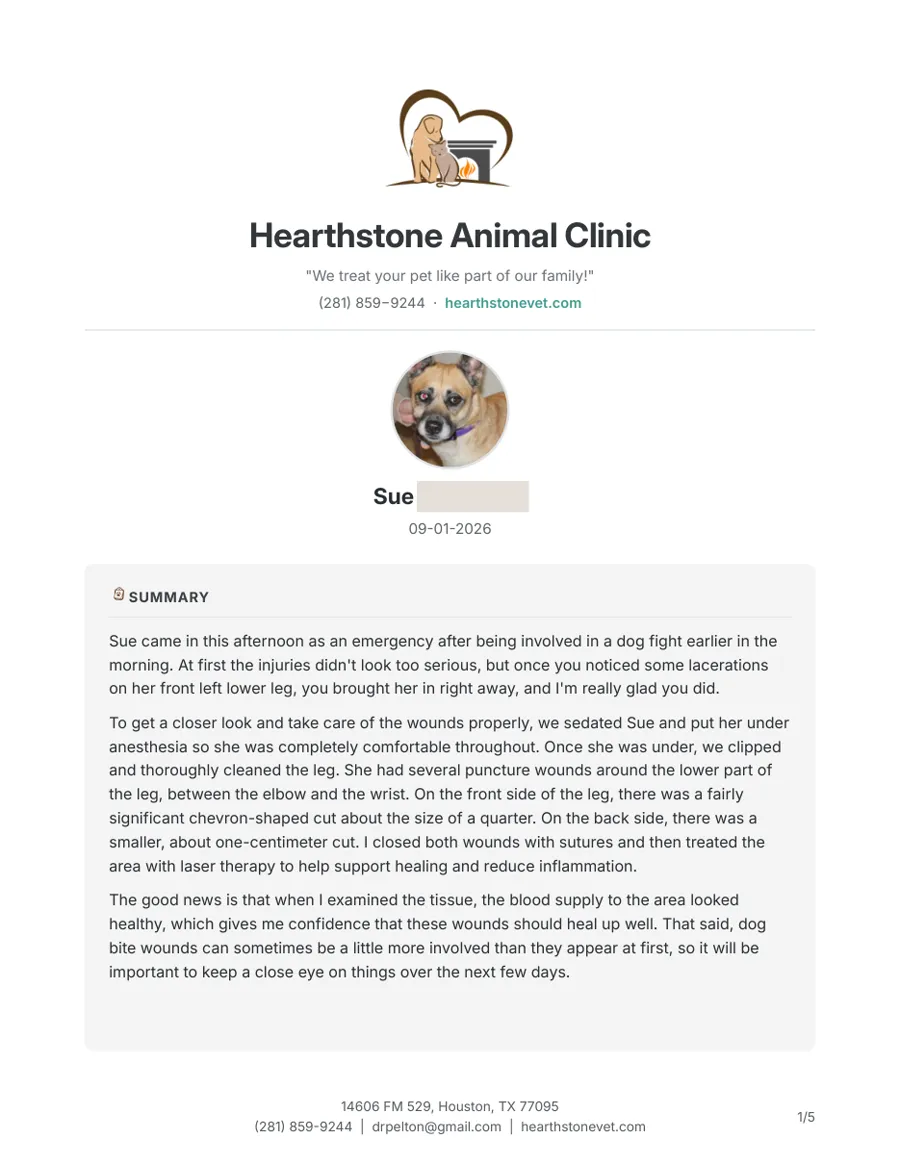
I dictate the plan out loud. AI turns that into a chart note and an owner-ready discharge in seconds. I still read what lands in the record. That workflow saves me ten to fifteen minutes per discharge, every day.
Discharge instructions were the first thing AI ever saved me real time on, and they’re still the thing it saves me the most. So this isn’t theory. This is the actual workflow I run as a solo doctor, on a normal overbooked day, in a clinic with one of me.
I’m going to walk it in the order it happens.
Do I have to type the discharge from scratch?
No. I talk. I don’t type.
I dictate the plan the way I would say it to the owner standing in the room. Rough, spoken, imperfect. “Okay so the dental went fine, took out two on the lower left, she is going to be a little groggy tonight, soft food three days, the pain meds are twice a day with food, recheck the extraction sites in two weeks.”
That’s the input. Not a form. Not bullet points. The way I actually talk. The imperfect version is the good version, because it carries everything the model needs and none of the stiffness I would add if I slowed down to type it.
How does AI write both the chart note and the owner discharge?
The transcript becomes two documents. They should never be written the same way.
The clinical note is for me and the next doctor. The discharge is for a worried person who isn’t medical and just wants to know what to watch for and when to call.
I ask for the owner version at a sixth-grade reading level, warm but direct, with clear next steps, no fear-mongering, and no guarantees. That last part matters. I hedge in writing even when I’m sure, because that’s honest and it’s smart.
What is the biggest mistake when using an AI discharge workflow?
Trusting the push. A tool saying success isn’t proof the note is whole.
Here’s the part I got wrong, because you’ll hit it too.
A visit worked up as a discharge only, with no full note behind it, was pushing just the plan. The exam findings, the history, the assessment, all of it silently absent. And the system reported success every time. The push worked. Three quarters of the note was simply not there.
The lesson is bigger than discharges. A tool telling you it succeeded isn’t evidence that it did the thing. So I rebuilt it to reconstruct the whole note from the transcript when there’s no separate note, and to know the difference between me examining the dog and the owner chatting in the background. Without that, it will happily file “we were at my sister’s this weekend” as a clinical finding.
Read what actually landed. Every time, until the workflow has earned your trust.
How do owners get the discharge after they leave?
They get a link that stays put, not a sheet that dies in the car.
The finished discharge becomes a clean sheet the owner opens on their phone, with a link that doesn’t expire out from under them a week later when they go looking for the medication schedule at 11pm.
That last detail is the one owners actually thank me for. Not the speed on my end. The fact that the instructions are still there, readable, when they need them most.
How much time does an AI discharge save?
Ten to fifteen minutes per discharge, back in my pocket, every discharge, every day.
That isn’t a productivity hack. On a solo day that’s the difference between eating lunch and not.
The instinct a lot of vets have here’s right. They want less time typing and more time doctoring. The execution is where it goes wrong, usually by trusting the output without reading it, or by feeding the model nothing and getting nothing back. Feed it your real voice, check what lands, and it holds.
If you want the prompt side of this in more detail, start with there isn’t a magic prompt. If you’re wondering what is safe to paste in the first place, read don’t paste the whole record into the chat. And if you want to see how this one workflow turned into a whole clinic stack, that’s the journey.
Questions I get asked
- How long does an AI discharge actually take?
- From the moment I stop talking to a finished, owner-ready sheet is a matter of seconds, not minutes. The old way was ten to fifteen minutes of typing per discharge. Across a full day that's the difference between leaving on time and not.
- Does the discharge still sound like me, or like a robot?
- It sounds like me, because I feed it my voice and my shorthand. The model can't fake a voice it has never seen. Give it your real rough version and it has something to match. Give it nothing and you get corporate filler.
- What is the biggest mistake to avoid?
- Trusting the push. Early on, a discharge-only visit would quietly drop three quarters of the note and still report success. Read what actually landed in the record, every time, until you've proven the workflow holds.
- Do I need to be technical to set this up?
- No. You can get most of the value with dictation plus a good prompt and a copy-paste. I built mine into a real tool over time, but that's the destination, not the starting line.
- What AI scribe do you use in your veterinary clinic?
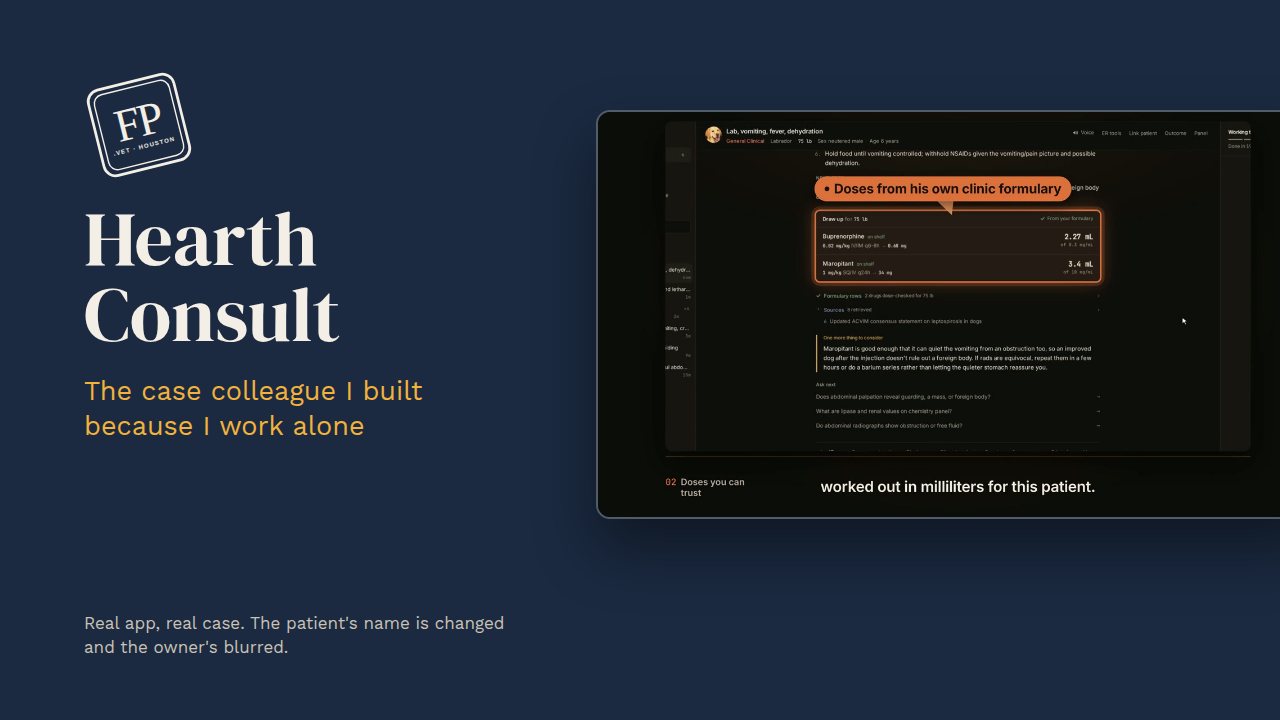
- I run Hearthstone Scribe on my own hardware. I talk through the exam. It drafts the SOAP note and the discharge and puts them back in Shepherd. I still read what landed.
Tell me what's broken in your clinic.
If this made you think of a problem you'd fix, I want to hear it.