There isn't a magic prompt. There's the real case.
The prompts that work in a veterinary clinic are not clever templates. They are messy, real context plus a short correction loop. I use ChatGPT and Claude this way between appointments, and I never let the first answer become the medical call.
You’ve probably seen the posts. “10 ChatGPT prompts every vet needs.” Copy, paste, become a genius. I’m not going to do that to you, because it doesn’t match how this actually works in a room with a patient on the table and a lobby backing up.
Here’s what actually works, learned the slow way, between appointments.
Do clever ChatGPT prompts matter more than context?
No. Context beats clever wording, and it isn’t close.
The biggest jump in quality I ever got wasn’t a better prompt template. It was giving the AI the real situation instead of an abstract question.
“What is this drug” gets you an encyclopedia entry. Compare that to: here’s the patient, here’s the weight, here’s what already happened, here’s what the owner can and can’t afford, here’s what I’ve already tried, what would you consider. Now it’s reasoning with you instead of reciting at you.
So don’t sanitize the messy parts out of your prompt. The mess is the information. Dump the real reality in and let it work with that.
Should I tell ChatGPT what I do not want?
Yes. This one is worth as much as everything you do want, and almost nobody does it.
“Don’t tell them to come in.” “Keep it short, they already know the history.” “The owner already declined surgery.” “We don’t have overnight staff.” “No generic marketing voice.” Every constraint you add closes off a whole category of wrong answer before it happens. A guardrail in the prompt beats a correction after it.
How do I get a better answer from ChatGPT in the exam room?
Correct it out loud. That’s the technique.
I don’t write long, careful, structured prompts. I write a short one, look at what comes back, and correct it like I’m talking to a fast junior colleague. “No.” “Shorter.” “Wrong perspective.” “Don’t say that last part.” “Add gabapentin.” “Okay, now put it all together.”
That back-and-forth isn’t me failing to prompt correctly. It’s the prompting. The first answer is a draft, always. Treat it like one and push on it until it’s something you can actually use.
Which means my prompts look nothing like the polished ones online. They look like “what the hell is this,” “no I mean the other thing,” “make it bigger I can’t read it.” Works fine. You don’t need to speak robot.
Can ChatGPT write in my receptionist’s voice?
Yes. The trick most vets miss: it translates between roles, not just reading levels.
Everybody knows AI can turn medical jargon into plain English. Here’s the one that saved me more time than that.
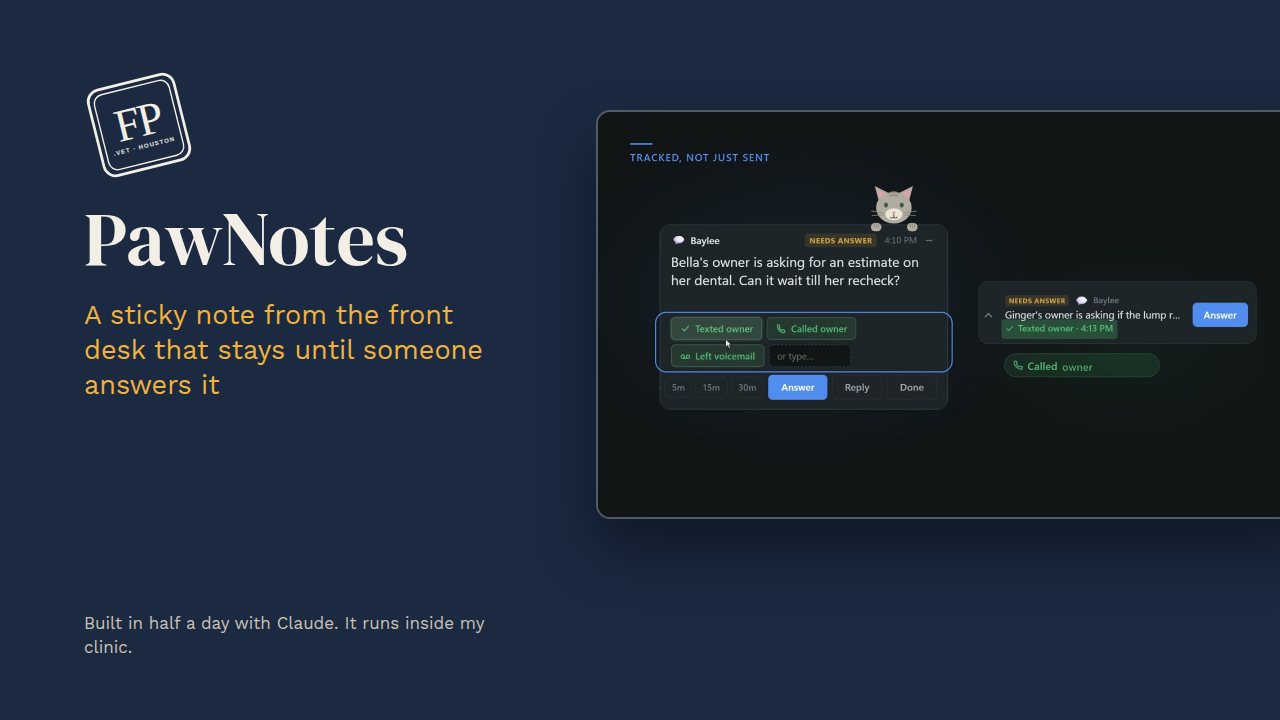
In my clinic I make the medical call, but my receptionist Baylee is usually the one who talks to the owner. So the prompt isn’t just “explain this simply.” It’s “this is coming from Baylee, after she talked to me, write it in her voice.” Not sounding like she diagnosed the case herself. Not sounding like we’re begging them to book.
AI is very good at that translation, taking a decision you already made and putting it in the mouth of the right person, at the right level, without changing the medicine. That’s a role I didn’t know I needed until I had it.
Can I reuse one AI answer for the discharge, the chart, and the owner message?
Yes. Reuse the thinking. One case, many outputs.
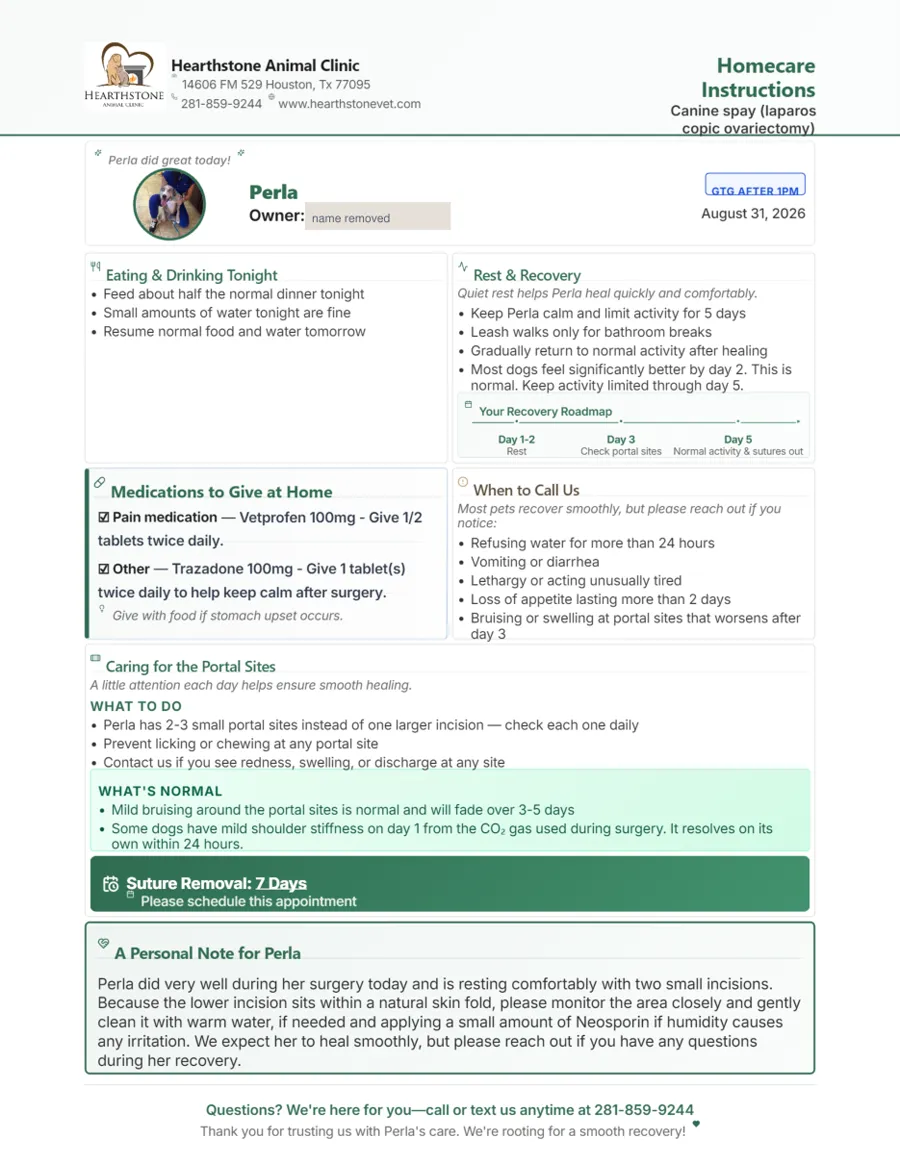
The last habit is the highest-leverage one. When you work through a case with AI, that reasoning doesn’t have to die in the chat. The same thinking becomes the owner explanation, the discharge note, the staff script, the handout, the Facebook post, the website page.
You did the hard part once. Let it pay out five times.
Does ChatGPT replace veterinary judgment?
No. None of this touches the medicine, and none of it replaces your judgment. That’s the whole point.
Your expertise isn’t what AI makes obsolete. It’s the filter that catches the answer that’s confident and subtly wrong. AI makes an expert dramatically faster. It doesn’t make expertise optional.
Two things before you go further. Be careful what you paste, because client names and records are a real question with a real answer: don’t paste the whole record into the chat. And if you want to see where this method leads once the prompts turn into actual tools, that’s the journey.
Questions I get asked
- Do I need to learn prompt engineering?
- No. The single biggest improvement isn't clever wording, it's giving the AI the real, messy context of the case and then correcting the first answer until it's right. If you can hand off a case to a colleague, you can already do this.
- Will an AI give me the wrong drug dose?
- It can, and it will do it confidently. Never take a dose, an interaction, or a diagnosis from a chatbot at face value. Use it to draft language and think through options, not to make the clinical call. You're the licensed veterinarian and the filter.
- Is it safe to paste a client's name or a patient record in?
- Treat it as not safe by default. Strip names and identifying details first, or use a tool built for clinical data. There's a full breakdown in the records article linked below.
- Why do my prompts give generic, useless answers?
- Almost always because you gave it a generic, context-free question. Vague in, vague out. Add the signalment, the history, the owner's constraints, and what you've already tried, and the answer sharpens immediately.
- What is the best ChatGPT prompt for veterinarians?
- There isn't one magic line. The best prompt is the real case: signalment, history, what you tried, what the owner can afford, and what you do not want. Then correct the draft out loud.
- Can I use ChatGPT for drug doses?
- You can ask it to think with you. You cannot take the number it gives you. Check every dose yourself. I use a calculator I built for the drugs I actually reach for.
Tell me what's broken in your clinic.
If this made you think of a problem you'd fix, I want to hear it.