







Build journal

What I'm building, as it happens.

Whenever I build something or figure something out, it goes here, newest first. The journey is the backstory, how I got from fixing a Facebook post to writing my own software. This is what came after, and it keeps going.

Want to ask about one? The link under each entry takes you to the room, where I answer.

October 2026

  1. Built

    I made eight movies starring my clinic team. Five of them on one Monday.

    This one has nothing to do with running a clinic, and I'm sharing it anyway, because it's the clearest picture I've got of how fast these tools are moving.

    Back in June I made my first little animated cartoon with Claude and Higgsfield. It was 85 seconds long. Last week I gave Claude one line, "an action comedy at the clinic, a little adult, about five minutes," and it came back with Code Spicy: a white Persian named Duchess with SPICY on her file walks in at 5:58 on a Friday. Copper, our clinic dog, narrates. Stephanie, Jenny, Baylee and I are all in it and we mostly look like ourselves.

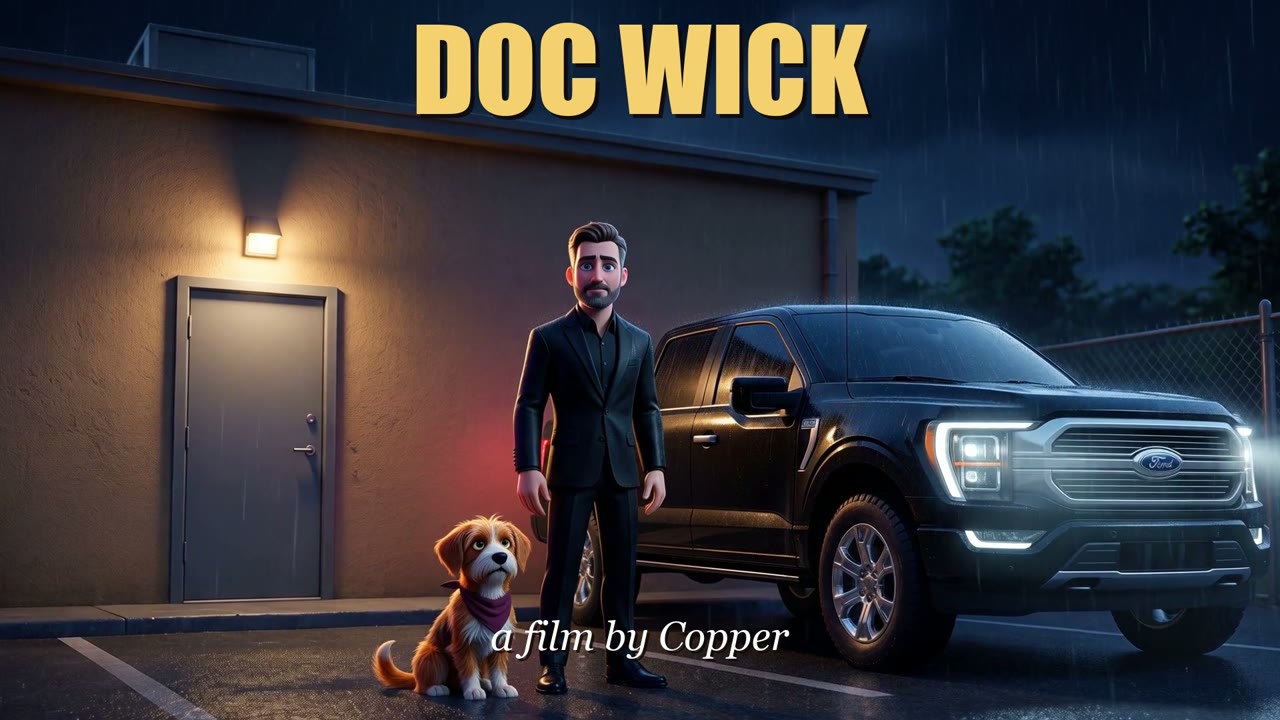
    Then it got out of hand. There are eight now. A heist movie where the clinic cats go after the good treat jar. A Matrix one. Home Alone with burglars after the espresso machine. Groundhog Friday. A Mad Max one where the vaccines get delivered to the wrong feed store. A John Wick one where a client blocks my truck in and steals Copper's squeaky duck. Five of them came out on one Monday, roughly one an hour.

    The process is the same one I use for everything else. Claude writes the script, builds a character sheet for each of us from the staff photos on our website, and plans every shot. Higgsfield draws it and makes it move. Claude cuts it together and lays the music under the narration. When something's wrong I say what's wrong and it goes again. Stephanie kept turning into Jenny in the first one, and I had dark hair in five of twenty-nine shots until the prompt said GRAY.

    They're all here, five or six minutes each: https://futureproof.vet/movies/

    Has anyone else tried making video for their clinic yet? Client explainers, team stuff, social? I'd like to hear what worked and what came out weird.

    Dr. P
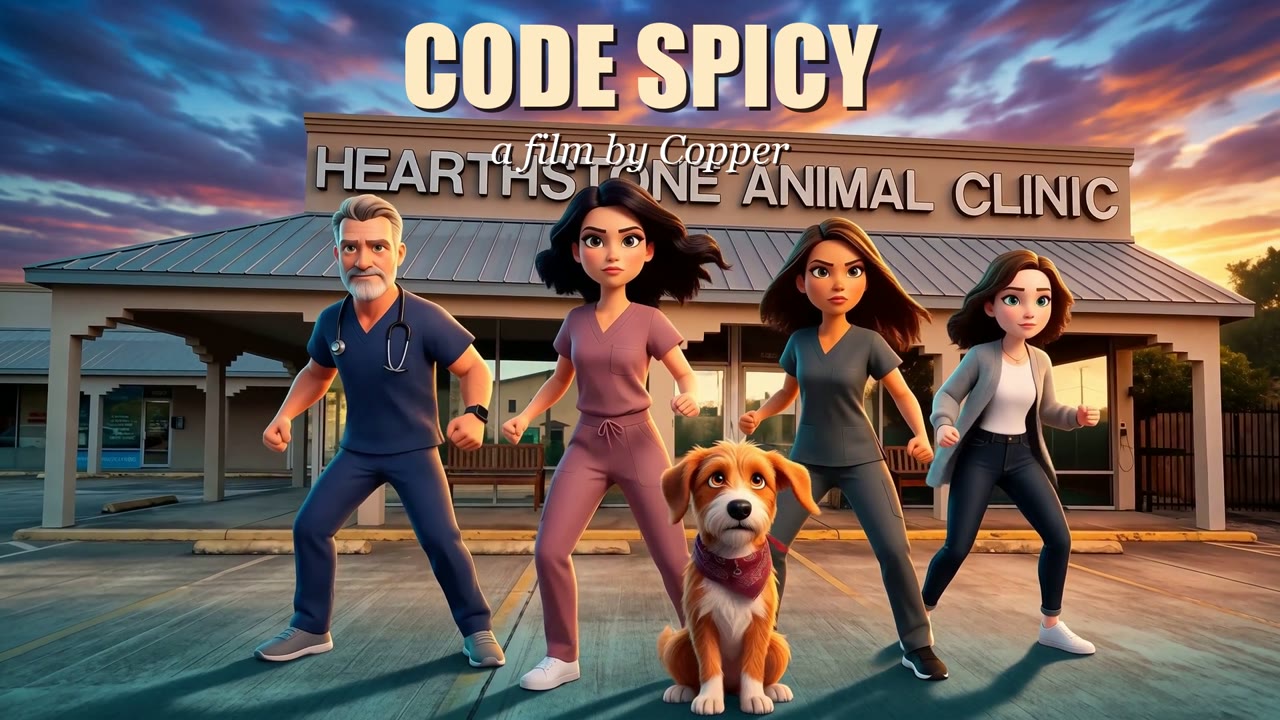
    Code Spicy title card: the Hearthstone team and Copper outside the clinic Talk about this in the room →
  2. Built

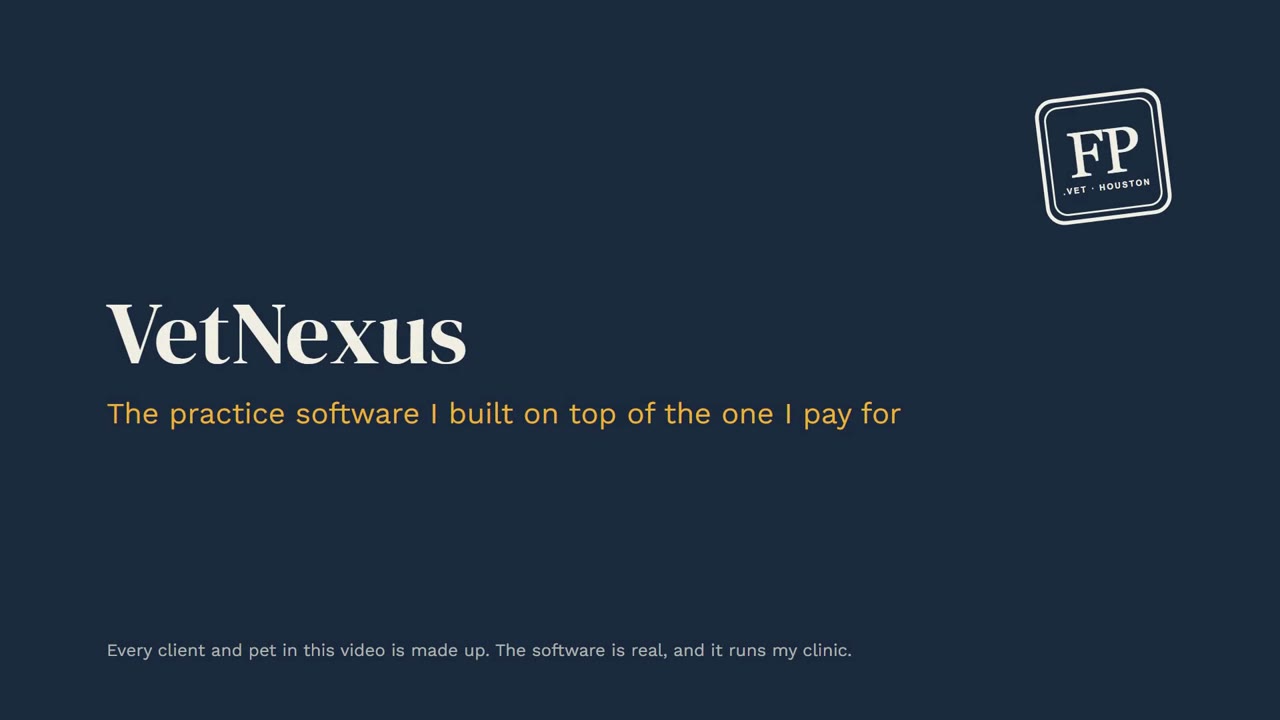
    My clinic switched software, so I built my own on top of it (VetNexus demo on the front page)

    In January we moved from VIA to Shepherd. Nineteen years of records stayed behind in VIA, in a database nobody supports anymore. A hundred thousand notes, every lab, every vaccine. So I asked Claude to help me read them. The first version took about half a day, off and on.

    Then I kept going, one annoyance at a time. It's called VetNexus now, and it's the first thing I open every morning. Every pet on the schedule gets a checklist that ticks itself off from the record, and Claude compares the notes to the invoice, so if we pulled two teeth and nobody charged for them, I find out before the client leaves. That one has paid for itself a few times already.

    The part I'd show another vet first is the chart summary. It reads a pet's whole history and writes what a good colleague would tell me before I walk in the room, including a section I asked for on purpose: advice repeated but not yet followed. On its first real run it found an ultrasound referral from months earlier that never happened. That's why it stays.

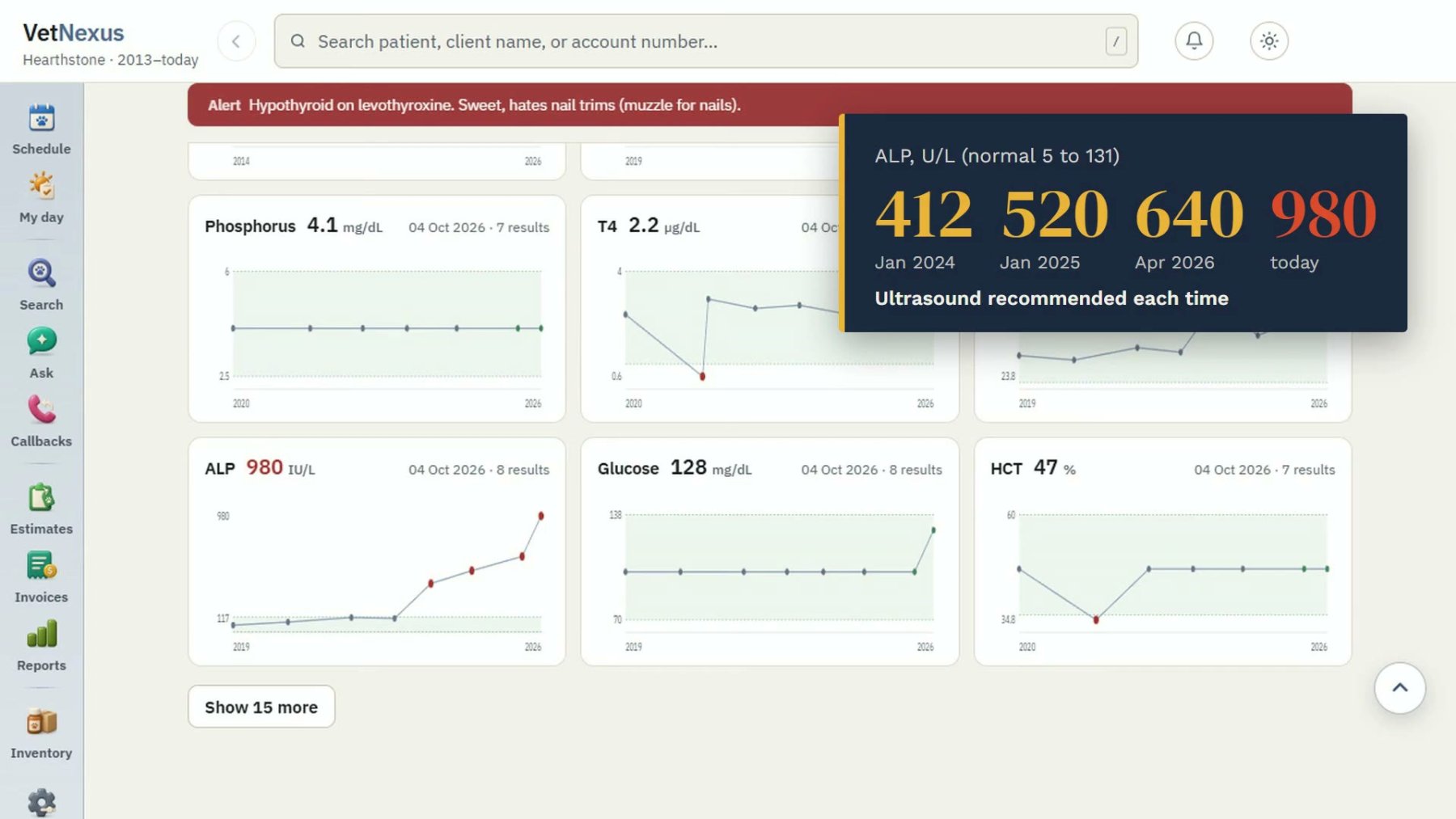
    I built a fake clinic for the video so I could show the real software without showing a single real client. The dog in it, Juniper, has a liver value that climbs for two and a half years (412, 520, 640, 980) while an ultrasound keeps getting recommended and keeps not happening. That isn't a made-up failure. It happens in every clinic. Watch what the summary does with it. The video and the whole story are here: https://futureproof.vet/learn/vetnexus-practice-software-built-with-claude/

    So a question for the room: what's the thing you check by hand every day that you wish something checked for you?

    Juniper's lab trends in VetNexus, with her ALP climbing 412, 520, 640, 980 (made-up demo patient) Talk about this in the room →

September 2026

  1. Built

    How and why I built Hearth Consult (demo on the front page)

    Most of my career it's been just me in the building. If you've ever worked somewhere with 3 or 4 doctors you know the move.. something doesn't add up, you lean into the next room and say "hey look at this one for a second". Half the time they don't even solve it, just saying it out loud to somebody who gets it is enough.

    When you're solo there's nobody to lean over to. You figure it out yourself while the next room fills up and a tech is standing in the doorway asking about the dental.

    I'd been using Claude for this in a plain chat window for a while. It helped, but it didn't know my formulary, didn't know the patient, and I was retyping the whole history every time. So last week I just asked Claude to build me the version I actually wanted. The first working version took a few hours.

    How it works, the short version:

    - I type the case like I'd say it. dog, 75 lb, vomiting overnight, sore belly. The first words come back in about a second - it leads with the bottom line, then a ranked list of what it could be, then the one question that would change the plan. That order was on purpose, I wanted what a good colleague does, not a textbook chapter - it searches a pile of free guidelines I gave it (ACVIM and ISCAID consensus statements, RECOVER, IRIS, AAHA) and shows which ones it used - a second, bigger model reads the answer and adds "one more thing to consider".. the thing you'd forget at 5:45 on a Friday

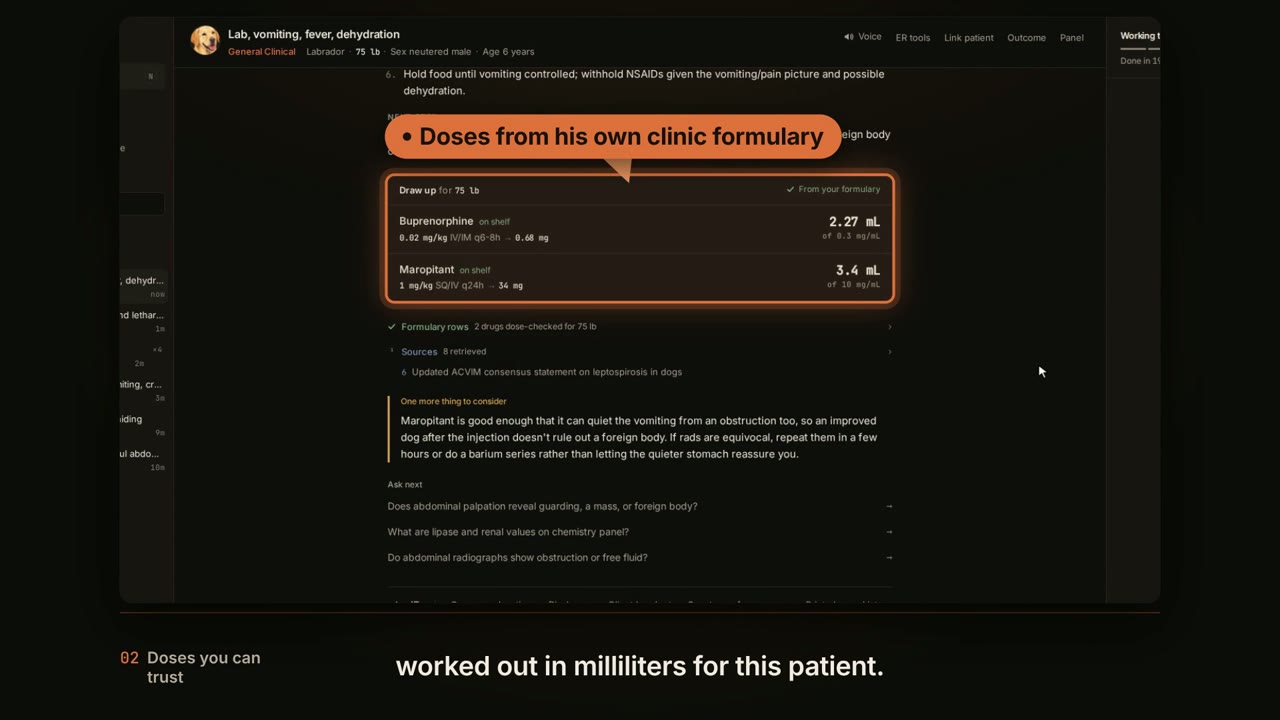
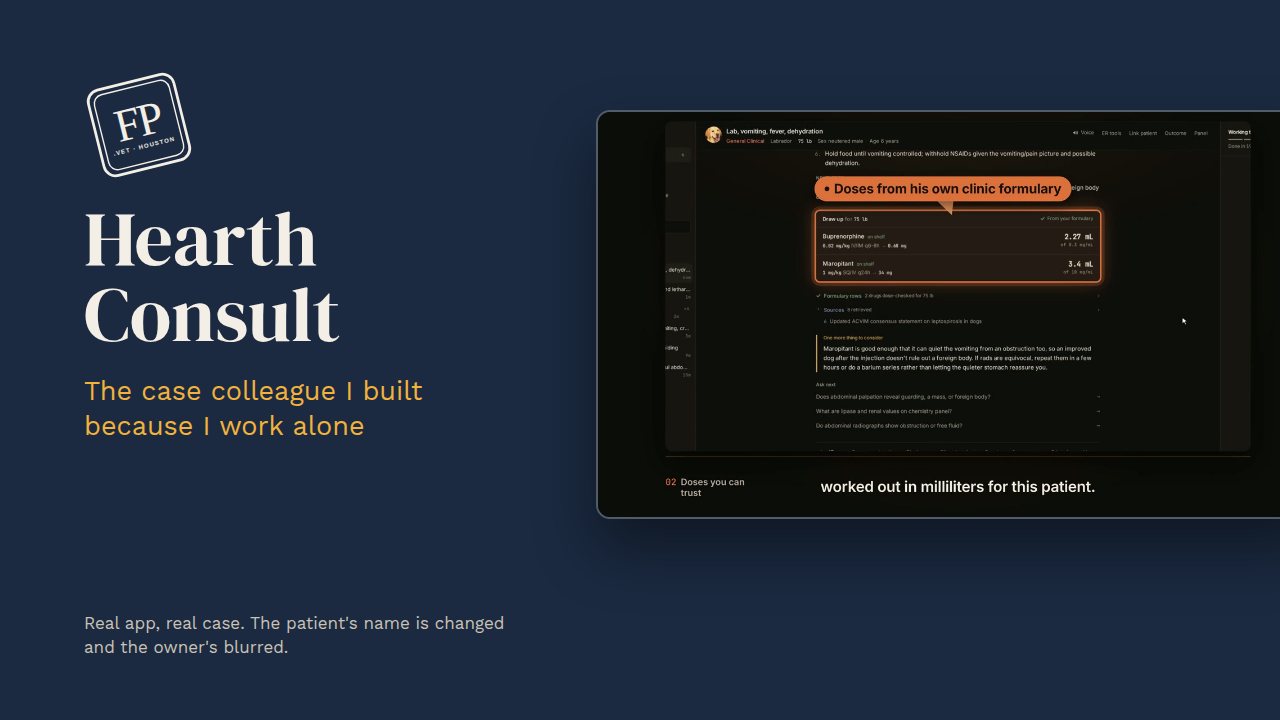
    The part I was most careful about was the drug math. AI is good at reasoning through a case and bad at arithmetic, and it'll give you a wrong number with total confidence. So the doses don't come from its memory. They come from my own clinic formulary (the same 217 drugs behind my drug calculator), worked out in mL for that patient, and then plain code checks the math again. If the words and the numbers disagree, the dose gets struck through on screen. Cats get hard stops on the drugs that hurt cats. I still read every one.

    The part I'm proudest of.. type @ and the pet's name and it pulls the chart right out of our practice software, today's exam and x-rays included. The owner's name and phone number get stripped out before anything goes to the AI. After that the answer stops being generic, it's working off that patient.

    Then the stuff I added because I kept wanting it:

    - it reads the short version out loud in my George voice - one click turns the plan into an owner handout - if I tell it we're out of a drug, it plans around that and remembers - ER tools with no AI in them at all.. CPR timer with a metronome, drip and fluid math, tox checks for dogs and cats. On a bad day I don't want a language model anywhere near a CPR count - it works on my phone, which is honestly where I use it most

    It runs on a little server at the clinic and it's just for me, so there's nothing to log into. The 2 and a half minute demo is on the front page: https://futureproof.vet/#demo-hearth-consult

    I'm going to keep doing these, a quick demo video for each thing I build, so there'll be more.

    If you work solo too.. what do you do when a case doesn't add up? And if anyone wants to know how any piece of this works, just ask.

    Hearth Consult answering a quick case question: doses for a 75 lb dog drawn from the clinic formulary, worked out in mL Talk about this in the room →
  2. Built

    Home Chef Fun! An app that talks you through dinner

    We get Home Chef meals delivered all the time. The directions are pretty simple, but it's all on one page, and some nights there are 6 or 7 steps and it gets a little confusing what the right order is.. what goes in the oven first, what you should be doing while it's in there, etc..

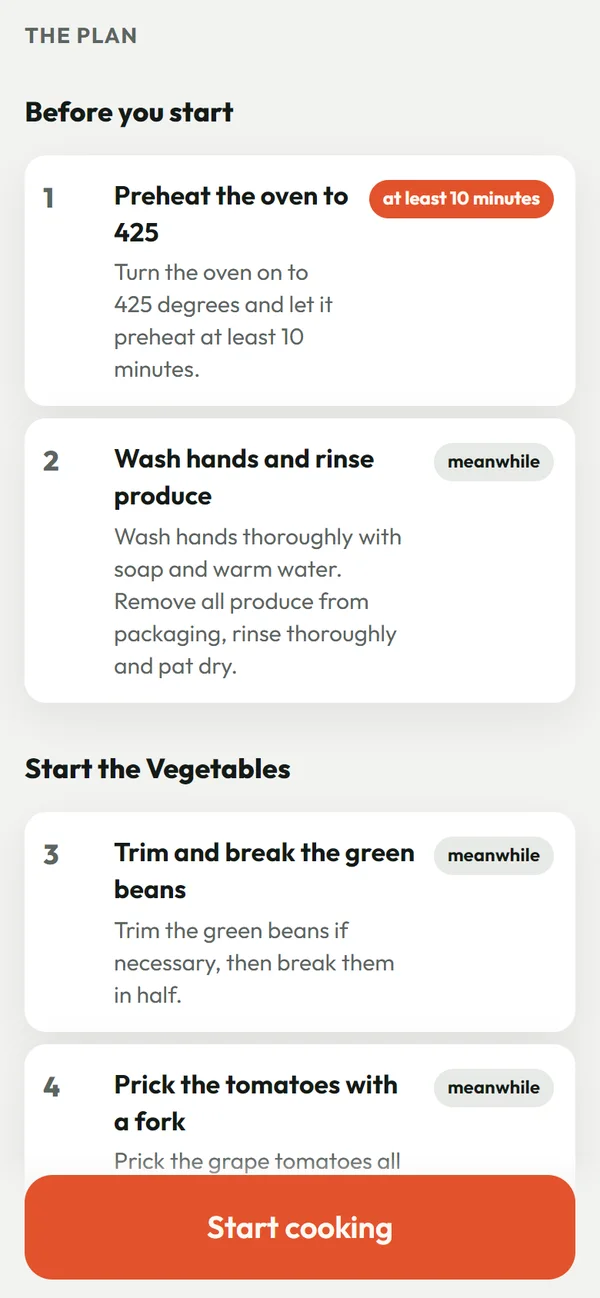
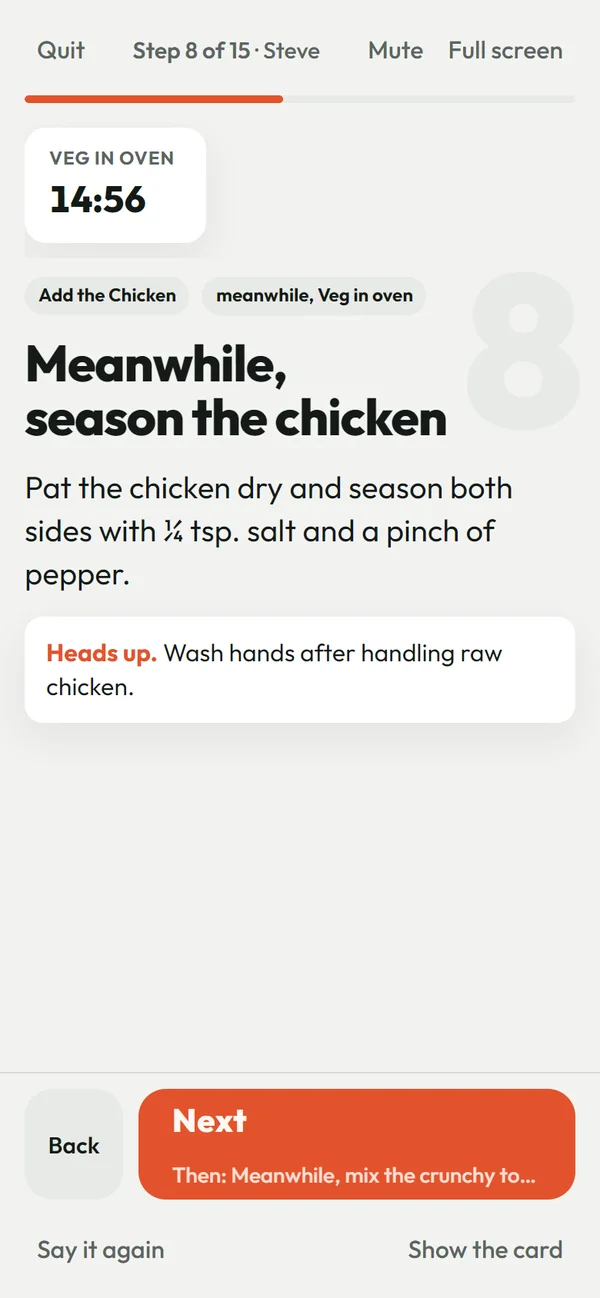
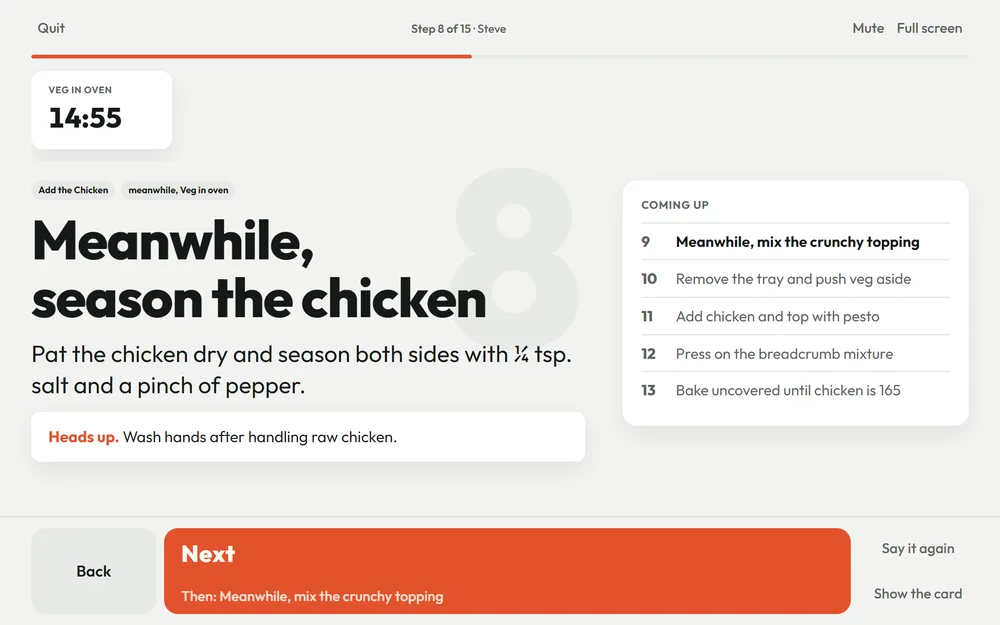
    so i made an app that makes it fun and talks to you. You take a picture of the front and back of the card, Claude reads it and puts the steps in the order you'd actually cook them, then it walks you through one step at a time, out loud, with the timers running. The Crunchy Pesto Mozzarella Chicken card came back as 15 steps with 3 timers, and it has you season the chicken while the veggies are in the oven.

    It says your name before the important steps, keeps score of who has cooked the most dinners, and if you start on your phone it picks up right where you left off on the big touchscreen in the kitchen.

    Built it with Claude on Thursday. It's behind a house PIN so there's nothing to log into, but these screenshots are the real thing. If anyone wants to know how it works, just ask..

    (not sponsored, we just eat a lot of Home Chef)

    Home Chef Fun on a phone: the recipe card re-cut into a numbered plan, with a 10 minute oven timer and meanwhile stepsHome Chef Fun kitchen mode on a phone: step 8 of 15, season the chicken, with the vegetable timer counting downHome Chef Fun on the big kitchen touchscreen: the current step on the left, the next five steps on the right Talk about this in the room →
  3. Notes

    The useful part is getting it to sound like me

    Owner explanations, discharge notes, handouts. That is still some of the work I use this for most.

    The useful change was giving it examples of my own writing before asking it to write anything. Otherwise it drifts right back into generic marketing voice. My shorthand goes in, then I read what comes out and decide whether I would actually say it.

    Have you found a way to get it closer to your voice? Share a prompt or an example if you want. Leave the client and patient details out.

    Talk about this in the room →
  4. Notes

    Pawnotes!

    We needed a good messaging system in the clinic, from front desk to back in treatment, to back in my office. Sidenotes worked, but it was clunky, old and blah.. so i made something fun, and the notes stay "sticky" which means they don't go away until it is seen, and done, you can move them, snooze them, or reply, etc.. and it syncs with slack...

    Talk about this in the room (1 reply) →